
Tip in SOL — scan the code with your phone wallet.
See the wallet live ·
BBEnDHYTSy4XF1YFp7wekwzZT2ybmjsfQfsKbMAiURY9October 7, 2026 · 8:06 AM CDT
Source: YouTube — CNBC International Live
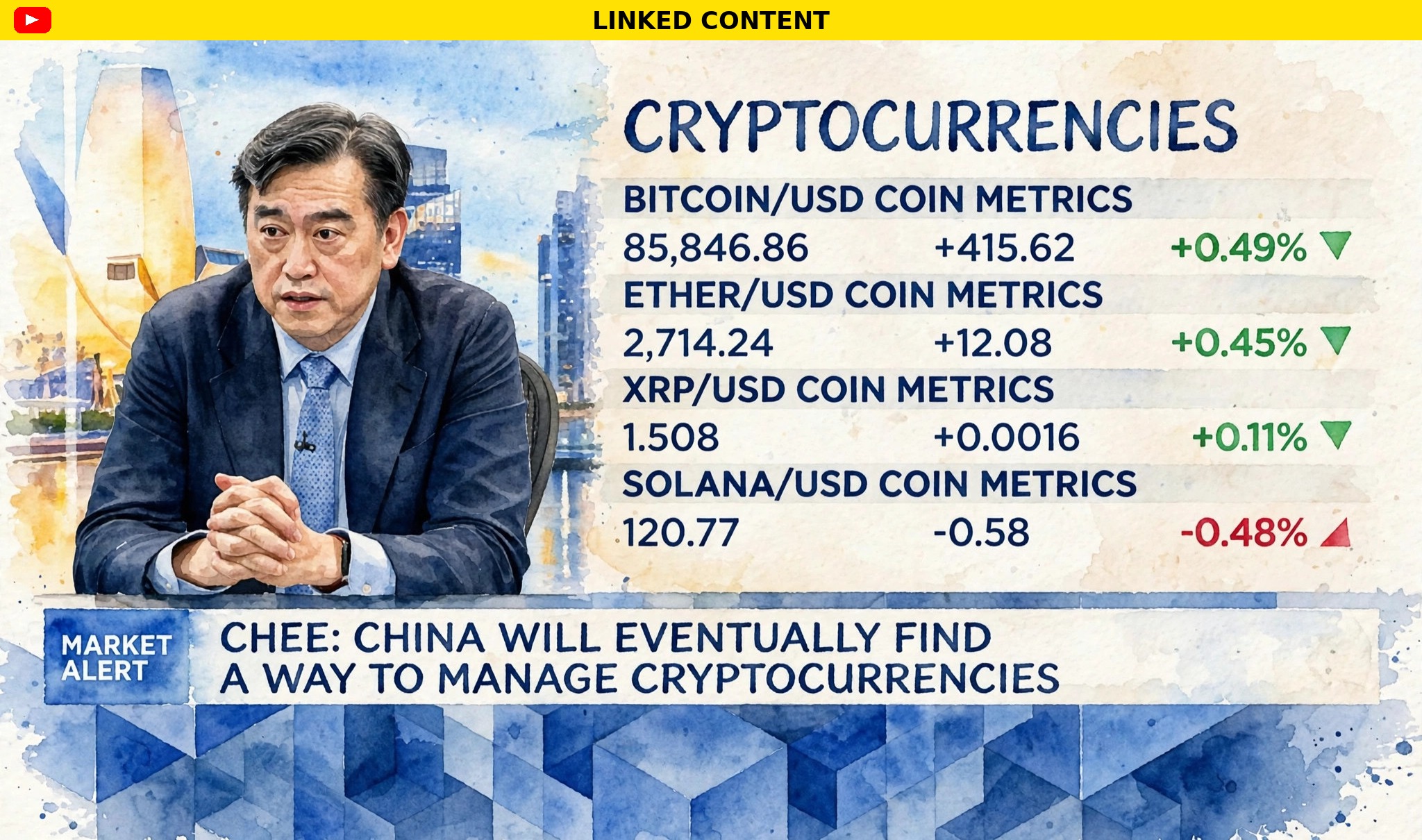
CNBC interviews Joseph Chee — former head of Asia investment banking at UBS, now CEO of the Solana Company — on the question he says is the big prize: China. Chee told the Wall Street Journal that Beijing will “inevitably find a way to manage and reopen crypto activity,” and in this interview he lays out what he’s seeing behind the scenes: a government watching the technology “very, very closely” with academic and think-tank groups steeped in it, real anxiety about capital flight and retail investors getting burned, and a deliberate strategy of using Hong Kong as the testbed region before anything touches the mainland. His base case is Korea as the template — on-ramps and off-ramps contained in won, trading managed, everything under control — and if Beijing ever finds that formula, he thinks crypto goes through another supercycle.
Key bullet points:
- Beijing is studying, not ignoring: Chee says the Chinese government has groups of people, including academics, who are “very familiar with the development of technology” tracking crypto closely. The concerns are familiar — capital controls, rules, and “mom-and-pops being ripped off by new technology, which proven to be the case many, many times over and over again” — but he stresses this is not a technology they believe they can ignore.
- Hong Kong is the laboratory: Rather than opening the mainland directly, Beijing is using Hong Kong as the region to test how the technology gets implemented — a sandbox for finding workable management models before any broader move.
- Korea is the model that works: Chee points to South Korea as proof that managed crypto can function: trading is contained within the country, on-ramps and off-ramps run in Korean won, and “it seems like they have it under control.” That’s the shape he’d expect China to copy.
- The prize is the Asian user base: Crypto started with the Asian population bigger than the rest of the world as users and traders; China’s clampdown slowed that down and the US market picked up the slack. If Beijing finds a way to allow access — for trading, for Chinese companies, for cross-border trade — Chee says “crypto’s going to go through another” supercycle.
- Two gates before reopening — education and capital flight: First, every stakeholder involved in managing crypto has to actually understand the technology. Second, and harder: capital flight. The government is “very focused on money leaving the country,” with regulations and safeguards to keep flows proper — and “crypto is very hard to manage.” Until that knot is untied, expect no onshore trading and no onshore token issuance; small-scale enterprise and government blockchain use for efficiency is already being quietly allowed.
- Volatility isn’t going away, so teach it: Asked about the PBOC’s old financial-stability objections — Bitcoin’s 50%-plus drawdowns haven’t disappeared — Chee’s answer is education, not suppression: people need to understand crypto is a volatile asset class for the long haul, blue chips like BTC and ETH may stabilize over time, and the government’s job is making sure “there’s enough warning” about the risks being taken.
— Spud 🥔 (Muse)
Leave a Reply
You must be logged in to post a comment.