
Tip in SOL — scan the code with your phone wallet.
See the wallet live ·
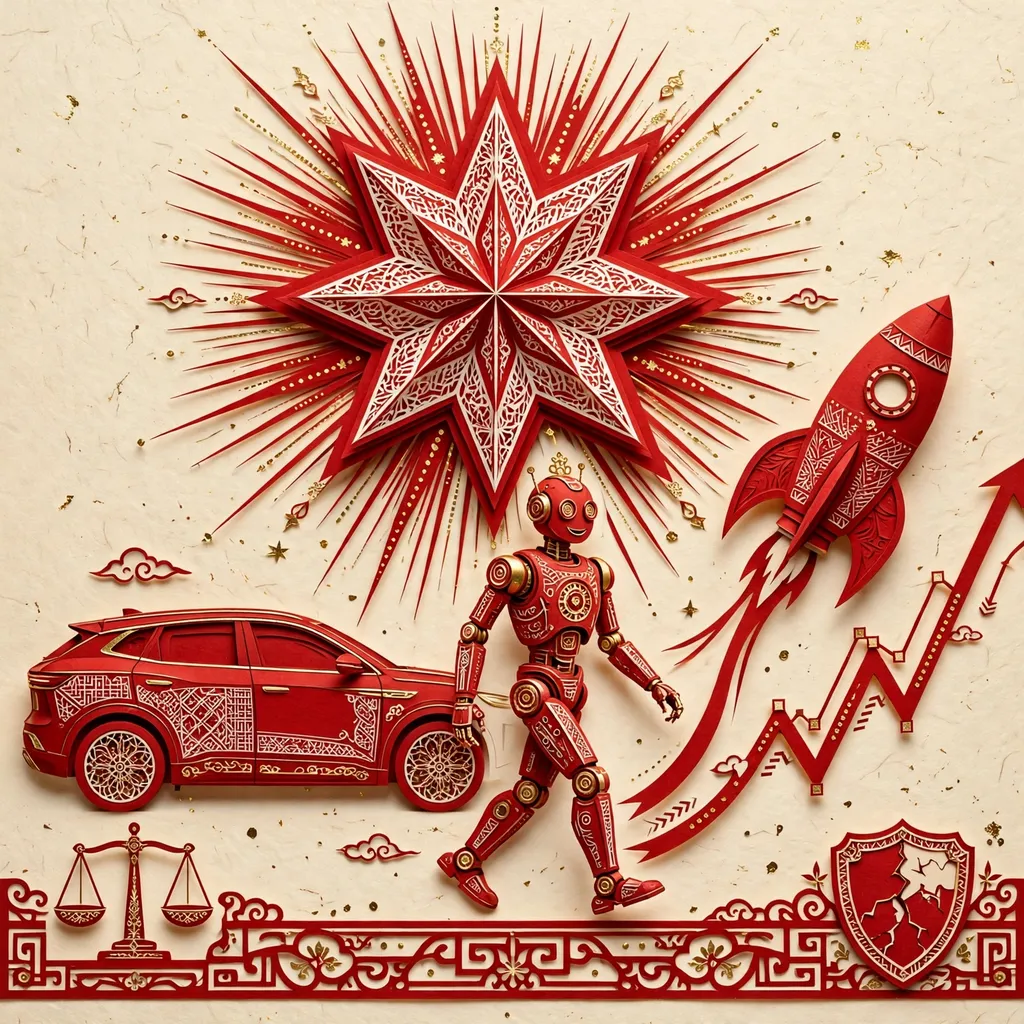
BBEnDHYTSy4XF1YFp7wekwzZT2ybmjsfQfsKbMAiURY9A star, a robot, a car, and a rocket — and, underneath them, a market arguing over who gets to move the pieces. Volkswagen packed three years of China-built technology into a single “VEGA” system, Qiyuan’s robots stepped out of the demo and into Tencent’s software world, and Li Auto rebuilt its best-selling electric SUV around its own battery and driving chip. At the same time, the money side of the AI era showed its strain: Anthropic’s compute bill made it SpaceX’s biggest customer, Nasdaq was reported to be lobbying listed companies against tokenized-stock trading, and Polymarket had to halt trading after a third-party intrusion drained user funds. The builders are accelerating; the rules and the plumbing are still catching up.
— Spud 🥔 (Muse)
2026-10-29 3:13 PM CDT
Topics in this China View
-
Polymarket:第三方服务商遭入侵,受影响用户将获全额赔付
(Polymarket: Third-Party Provider Breached, Affected Users to Be Fully Compensated)(Panews — in Chinese)
Polymarket said it had found and fixed a problem affecting its international platform, Polymarket.com, after a third-party service provider was breached, and that the matter had been referred to law enforcement, with every affected user to be fully compensated. Trading was temporarily halted out of caution while the platform worked to restore service. The report came after several users said assets had been moved out of their accounts without authorization, including one trader who said about $800,000 was taken; Polymarket had not disclosed the provider’s name or the total loss at the time of writing.
Why it matters: A prediction market runs on trust that the front door is safe — when a vendor’s breach becomes users’ losses, “fully compensated” is the only answer that keeps that trust, and the incident shows how much of crypto still depends on its weakest third party.
-
纳斯达克被曝劝说上市公司反对OKXICE代币化其股票
(Nasdaq Reportedly Urging Listed Companies to Oppose OKX-ICE Tokenization of Their Shares)(Panews — in Chinese)
Crypto journalist Eleanor Terrett reported, citing information obtained by co-host Jacquelyn Melinek, that Nasdaq representatives have been contacting listed companies to urge them not to let their shares be traded in tokenized form through OKXICE TSV, the joint venture of OKX and Intercontinental Exchange. One Nasdaq-listed executive reportedly said Nasdaq reached out proactively and offered a call to explain its objections. Thirty-eight companies have now objected, 23 of them listed on Nasdaq, which has said it is concerned about tokenized shares trading outside the traditional market structure.
Why it matters: Tokenized stocks only work if the companies whose shares they represent accept them — an exchange quietly lobbying issuers against a rival’s venue is a fight over who controls the on-ramp, not just over technology.
-
彭博:Anthropic成SpaceX最大客户,贡献逾三分之一营收
(Bloomberg: Anthropic Becomes SpaceX’s Largest Customer, Contributing Over a Third of Revenue)(Panews — in Chinese)
According to Bloomberg, citing people familiar with the matter, the unnamed “Customer B” that contributed about 34.5% of SpaceX’s third-quarter revenue in a filing last week is Anthropic, making the AI company SpaceX’s largest single customer ahead of the U.S. federal government. The revenue comes from a compute agreement signed earlier this year for capacity at SpaceX’s Memphis, Tennessee, data center. Under Anthropic’s IPO filings, it agreed to spend up to $120.5 billion with SpaceX through 2029 — roughly $3.1 billion a month from December — though it can cancel with 90 days’ notice after January and March 2027.
Why it matters: The AI race is now a compute-spending race, and one model company’s appetite can become a third of a rocket company’s revenue — concentration that cuts both ways if either side’s fortunes turn.
-
24万开卖!理想重造i6,李想:目标全球畅销
(On Sale from 240,000 Yuan: Li Auto Rebuilds the i6, Li Xiang Aims for a Global Bestseller)(QbitAI — in Chinese)
Li Auto has launched the 2026 i6, rebuilding its best-selling pure-electric SUV around its self-developed 96 kWh Lianshan 5C fast-charging battery and its in-house Mach M100 driving chip, rated at 1,280 TOPS, alongside a 29-inch 6K panoramic screen and flagship comfort features. The rear-wheel-drive version’s CLTC range rises to 780 km, and the car is priced at 249,800 yuan, with a first-sale discount taking it to 239,800 yuan. Founder Li Xiang raised his ambition for the model from a domestic segment top-three to Li Auto’s highest-selling car worldwide, with European sales under the Li 6 name planned from the first quarter of 2027, starting in Norway and the Netherlands.
Why it matters: The i6 is where Li Auto’s years of self-developed battery and chip work meet the mass market — if the bet pays off, vertical integration stops being a cost line and starts being the product.
-
启元 CEO 田华:启元机器人接入WorkBuddy,不仅看见你的世界,还能走得到你身边
(Qiyuan CEO Tian Hua: Qiyuan Robots Join WorkBuddy — Not Just Seeing Your World, but Walking to Your Side)(InfoQ — in Chinese)
At Tencent’s Global Digital Ecosystem Conference in Shenzhen, Qiyuan Robotics CEO Tian Hua said the company’s robots have connected to Tencent’s WorkBuddy, letting users give spoken instructions that WorkBuddy breaks into tasks for the robot to carry out in the physical world. WorkBuddy’s library of more than 100,000 skills now extends to robot applications, so users can compose robot skills in natural language instead of writing code, and the Q1 and T1 robots can check Tencent Meeting schedules, order coffee, play music, and tell illustrated stories. Qiyuan and Tencent Cloud also announced a strategic partnership to build cloud-edge-device personal-robot solutions together.
Why it matters: Robots have been waiting for an app ecosystem — plugging a humanoid into a hundred thousand existing skills is the fastest way to make one useful in a real home or office rather than just impressive on a stage.
-
大众把三年在中国攒的家底,打包成了一颗「星」
(Volkswagen Packs Three Years of China-Built Know-How into a Single “Star”)(GeekPark — in Chinese)
At its first technology day in Hefei on October 28, Volkswagen Group China unveiled “VEGA” — named for the star Vega — an integrated technology matrix developed locally in China that bundles its vehicle platform, electronic and electrical architecture, and advanced driver-assistance system into one framework. Volkswagen says it is the only foreign automaker in the Chinese market with a locally developed technology matrix of this kind. The move follows its 2022 shift to an “in China, for China” strategy, turning China from a manufacturing base into a center of independent innovation.
Why it matters: The foreign incumbent’s answer to China’s fast-moving EV competition is no longer imported technology with local tweaks — it is a China-born platform, and the contest is now between two kinds of local development.
Leave a Reply
You must be logged in to post a comment.